Giallo Reviews
  • Home
  • About
  • Reviews

Deadly Inheritance (1968)

9/2/2024

0 Comments

 
Picture
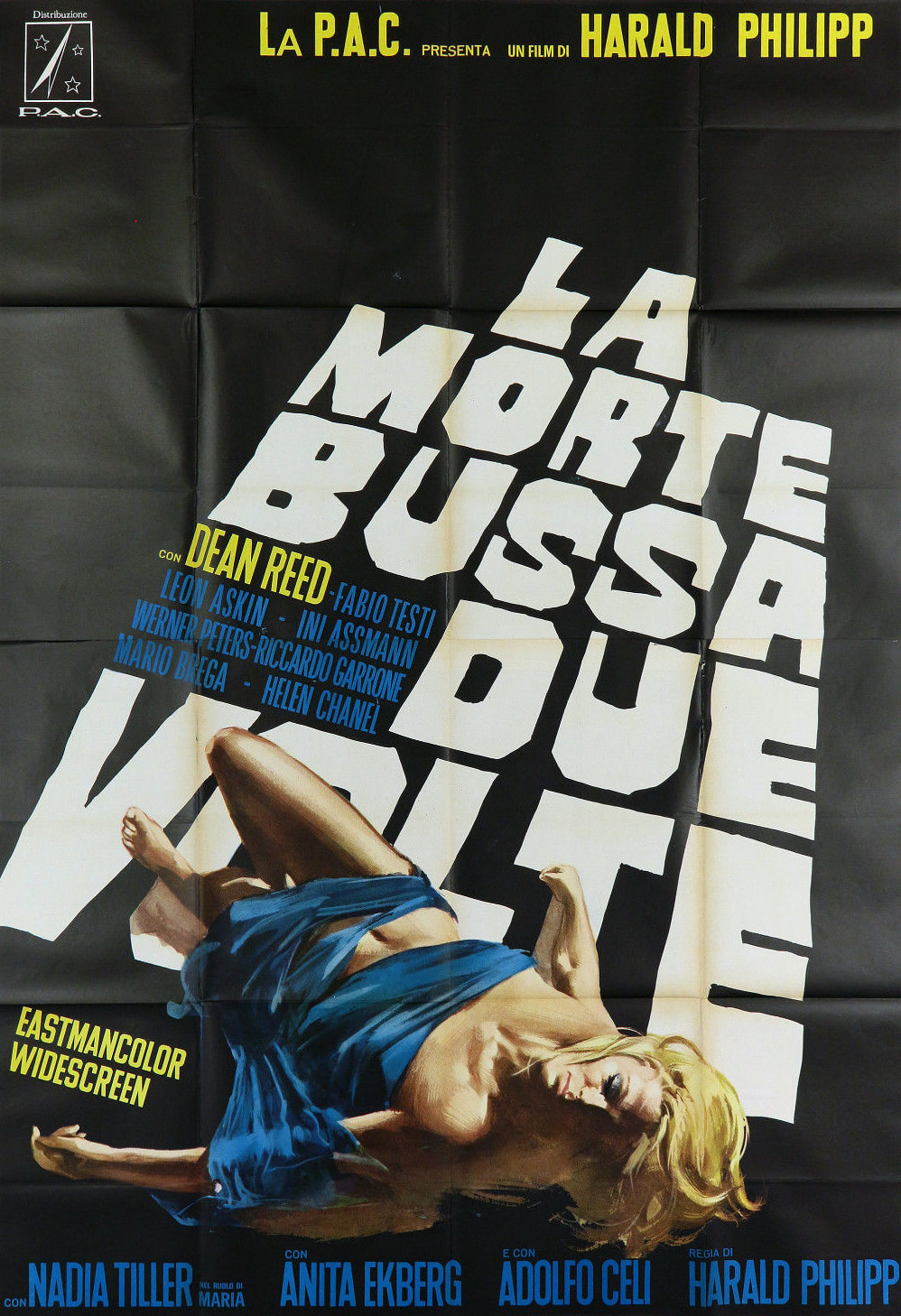
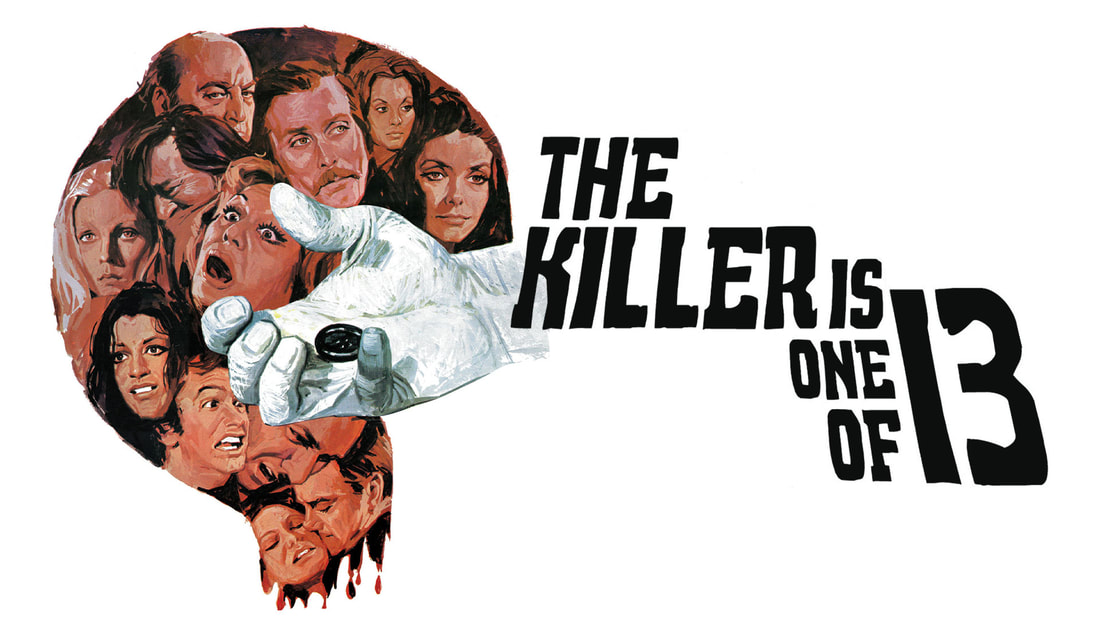
A cheap and cheerful early example of the filone, this is one of the gialli which took its cue from Blood and Black Lace, with the plot centring on greed and inheritance. It's also one of the very first rural-set gialli, something which was probably a cost-saving measure more than anything else (the fact that the inheritance in question amounts to around £150,000 in today's money kind of sums up the limited ambitions and means of the film).

Failing to hear an approaching train, an old, deaf railroad crossing guard is killed whilst unenthusiastically swinging a pickaxe towards some stones (props for the shots which frame both him and the approaching train by the way, the ballsiness of which make up for the credits sequence containing the drabbest cinematography of all time). Initially thought of as a tragic accident, when it emerges that the guard had amassed a small (this being the operative word) fortune by playing stocks, and when his adopted son Janot quickly dies in another apparent accident, it seems that his heirs are engaged in a deadly battle to secure his inheritance. Will Inspector Greville, a horrendously-toupéed Inspector sent from the Big City to investigate, be able to prevent more the killer taking more scalps? Or, will the hair-raising slaughter wig him out? There'll be hell toupée if he doesn't succeed! Etc, etc.

I've actually already, in those opening two paragraphs, addressed the bulk of the viewing notes I took - this is an enjoyable yet extremely disposable film. The French setting is delightfully quaint, and the cinematography, while rough and ready, can't really go far wrong given the beautiful countryside setting (an Italian setting in reality, apparently). Even the shabby interiors have a kind of charm, and do add verisimilitude - rural French villages wouldn't have been home to many slick, spick and span apartments. There is one terrific example of such a location; the residence of the local playboy who owns the discotheque (and whose idea of décor is horrendous stripy wallpaper and some nudie magazine cut outs stuck on a mirror). 

The plot is reasonably tight, albeit the lack of a clearly-defined lead character does hurt it somewhat - we're presented with a load of people who occasionally act in a suspicious manner before being summarily dispatched in reasonably inventive ways (and one non-death fight scene is particularly inventive, as it involves a man being somehow savagely beaten with a towel). No-one is presented as being conclusively innocent, so we're limited to being curious observers rather than having any real investment in the fates of the characters.

The end revelations do make sense, just about, although there are too many collaborators for the explanation to be in any way believable. One of the characters' real identity, especially, is very much out of left-field, and while they don't necessarily do anything which definitively makes no sense, some of the things they've said over the course of the film do sail quite close to the wind (specifically, expressing doubts regarding the seeming resolution of the case needlessly invites further scrutiny). But, then again, it could be argued that it's what the character might be expected to say in the circumstances, had they not been knee-deep in deceit.

There's not a whole else to say about the film, really - I watched eight years after my first viewing in order to write this review, and my main memories of it were a) that it contained a ginger character (surely either Ernesto Colli or Bruno Corazzari [the former, as it turns out]) and b) there are train tracks. When the memory of this second viewing fades, I may also remember some truly fascinating dancing from the disco scene, a lot of incidental 'characters' staring curiously down the camera lens, and the one way in which it may have had a huge influence on American slasher films: having a forty year old (OK, a balding 28 year old who looks forty) playing a teenager. So, while it won't be troubling anyone's rankings of top tier gialli, it's fun, disposable fluff, which achieves more on a clearly limited budget than many other films manage with far more resources.
0 Comments

Abrakadabra (2018)

26/1/2024

0 Comments

 
Picture
Business as usual here from the Onettis: impressive visuals, retro kitsch in a way that's not overly kitschy, and a story that a child could've written. It apparently brings their giallo trilogy (c.f. Sonno Profondo and Francesca) to a close, not that they'd have necessarily told you that Sonno Profondo was part of a trilogy back when they made it (although then again it's possible that all three films were written over the same pint of beer). To be honest, it's probably no bad thing to put a metaphorical full stop on this style of filmmaking; they're very good at it, but there's only so many times you can refine such an idiosyncratic style as theirs before you descend into parody (and, thankfully, that has not happened here, although they're teetering on the brink).

Lorenzo Mancini is haunted by the memory of his father's death in a magic trick gone wrong. He hasn't let the trauma prevent him from carrying on the family tradition though, and is boozing his way through a career as a touring magic act when we first see him. His preparations for a new show in Turin are interrupted by the discovery of a murdered woman on the stage before opening night. Remarkably, this doesn't seem to have any real effect on anything, as the show goes ahead as planned. A very attractive show attendee is then murdered, as is a lady with whom Mancini has engaged in a threesome. Someone's trying to frame him, and it seems to have something to do with a weird pendant which bears an 'Abrakadabra' inscription. It also has something to do with his father's ex-assistant, who spent 20 years behind bars for the aforementioned murder, but who claims on his death bed that he's innocent because he's Mancini's father's brother (i.e. Mancini's uncle). This is bizarre because a) why did he withhold this information for so long, and b) brothers can still kill each other (c.f. Cain and Abel). Anyway, there's also a detective who smokes and walks a lot and a sexy assistant and a lot of old phones. And, of course, some J&B.

First (and best) things first: the look of the film. Yet again, the Onettis go extremely heavy on the editing filters (check out the ungraded footage if you own the Blu ray to see just how different the raw material looks), but somehow it works. The saturated greens and reds look great, for the most part, and there's no fake scratches or added grain this time. The contrast is pushed to such an extent that this image is frequently washed out with white blotches, but this happens so often that you have to assume that it's a deliberate choice. The outdoor scenes, wherein this occurs most frequently, do somewhat evoke the feeling of an old 70s print which has lain undiscovered in an attic for years, encroaching vinegar eating away at the image detail. The film's never unwatchable, though - far from it - and the dubbing and sound effects are on a par with the previous two films, as is the soundtrack (which is still lacking in nuance and quieter moments, but which nonetheless evokes old Bruno Nicolai and Ennio Morricone scores with great élan).

The acting is serviceable, again on a par with the previous Onetti films, and the faces of the actors are extremely well-chosen; you'd believe that any of them could have walked out of an early 70s Martino film (although it's fascinating to see how natural evolution has changed the shape of women's upper lips in the past 50 years, and one victim's tattoos and hairstyle weren't very 70s [her willingness to disrobe is, however, redolent of 70s actresses]).

Some of the locations are excellent - the Onettis make decent use of the theatre location, and some drone shots showcase the 'Turin' architecture brilliantly. (There are a lot of overhead/high angle shots in the film in fact, no doubt inspired by recent Irish gialli.) We get a return to their old favourite location - the graveyard, which, as per, they shoot in blinding sunlight. The chase sequence they stage here, involving Mancini sprinting from the detective figure, who strolls casually but menacingly after him, never seeming to lose ground, serves as both a parody of the preponderance of such scenes in slasher films and as a cheeky clue as to what's really going on here.

Because, yes, there is a story here - someone's killing people and trying to frame Mancini. There's a very slight nod of the head at the concept of an investigation by Mancini, but mostly the film consists of dialogue free mood sequences driven by cinematography and music. This is probably a sensible approach for no budget filmmakers - forget about the technicalities of live sound recording and focus on doing one thing (cinematography) well, and use your composing skills to fill in the gaps later on (it helps if you're also a very talented composer). As I've suggested above there's not a huge amount going on plotwise (although there is a concluding twist which I'm fairly sure has never been done before), and the film, and the Onettis' universe as a whole, is probably tangentially-related to the Cattet-and-Forzani-sphere, albeit the Onettiverse isn't completely starved of oxygen and vitality; the camera bumps and jerkily zooms around, the corpses breathe and the passion is evident throughout, whereas the refinement process to which the Belgians' world has been subjected has rendered it devoid of vitality.

Keep an eye out for the newspaper stories that are used throughout and have no relationship whatsoever to the headlines - I think that's probably a deliberate choice, as that did and does happen in other films, but it's quite something to see a snatch of an article about Bobby Fischer playing chess under a headline about a murder. The English-language inserts, in fact, are another example of the dedication of the brothers to giallo verisimilitude (which is often diametrically opposed to actual verisimilitude, AKA real life). And so, as you watch the typically lengthy closing credit sequence (which does at least contain more than two names) play over a poor Poor Man's Process shot, raise a glass of J&B to these Argentinian workhorses for their three fine films, but please, if you're a rich scriptwriter, write their next giallo for them, and throw them a bit of scratch for the budget.

IF YOU find a box of matches from a bar it's definitely a key clue and you should head to that bar immediately on the assumption that whoever lost them will be there Right Now.
0 Comments

Body Puzzle (1992)

11/1/2024

0 Comments

 
Picture
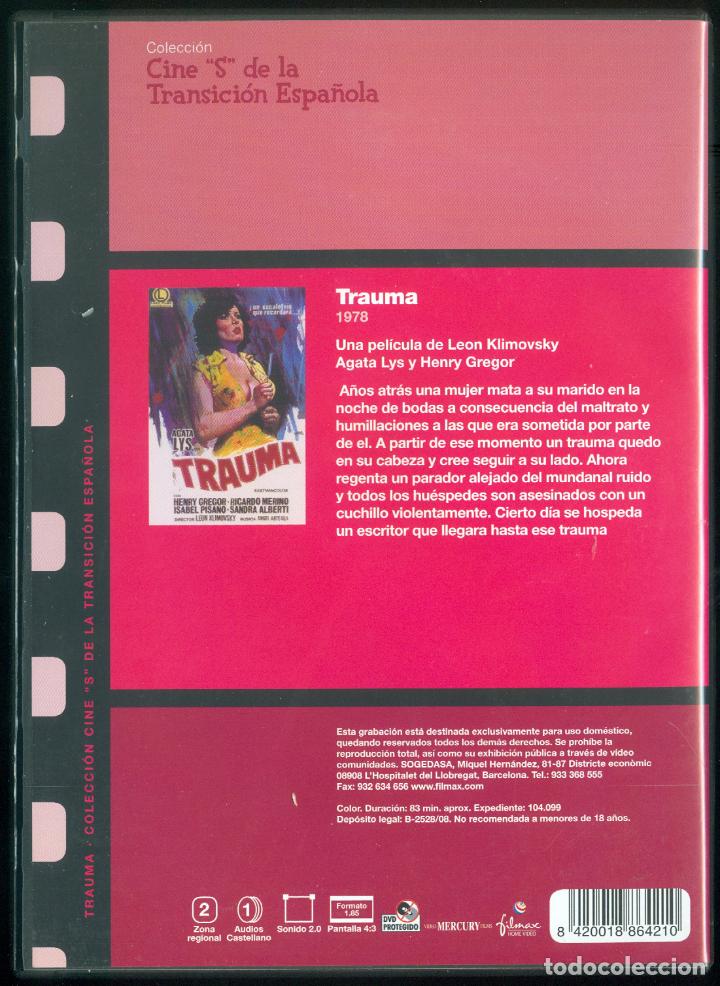
A classic Lamberto Bava giallo, in that it is anything but a classic giallo, but it's ruddy bloody good fun, and probably in the top 2 90s gialli (along with Trauma, since you asked) in an admittedly preposterously weak field.

A long haired, crazy-eyed man is stalking and killing a seemingly random assortment of people from whom he extracts a variety of body parts, some of which he sends to recently-widowed Tracy, whose house he regularly visits. As Tracy finds solace in the arms of the investigating police officer, a link between the victims emerges-they all received organ donations from Tracy's husband, a piano player (a better writer would have made him an organ player) who died in a motorcycle accident. But just who is the weird chap going around killing everyone and retrieving the organs?

That question is a pretty, pretty contentious one, to which I shall return... The first thing to note here is that this is a very 90s film, in that it's a real product of its time. The 90s was (unless you were living in the Balkans or Rwanda) a time of fairly low-octane living, with no huge wars or conflicts, economic growth and Big (but slightly dumb) Movies-think Independence Day, Titanic, even Jurassic Park (which isn't that dumb, but its plot didn't overly tax my 8 year old brain when I first saw it). I hesitate to compare Body Puzzle directly with these films, not least because the plot may well prove extremely taxing on the brain, but it's undeniably a fun, frivolous film. (Though saying that, not many  gialli are gritty and serious.)

The look of the film is very Italian 90s, albeit at the upper end-think one of those Sergio Martino erotic thrillers or a Joe D'Amato Filmirage production if the budget of either was doubled. The direction is mostly functional, with the occasional use of steadicam or dolly tracks adding a touch of class to proceedings-an early scene in which the mysterious killer stalks round Tracy's house at night benefits hugely from some fluid camera work, setting a high bar of which the remainder of the film sadly falls somewhat short. It's a real shame that steadicams weren't around in the heyday of the genre, as the likes of Martino could've made great use of them (as it is, Argento has dabbled to great effect on occasion). There are occasional crew reflections visible as well, which somewhat takes the gloss off the not-overly-glossy cinematography.

And nowhere is the lack of glossiness more apparent than in the police station scenes. It's as if Italian directors were allergic to staging a dynamic police station scene which didn't somehow look like something from a stodgy black and white film, so lacking in joie and vivre are those sequences. And there are a lot of cops in this film-it's one of the police procedural subset, with Tracy taking No Steps Whatsoever to try and figure out what's going on, seemingly content to exist in an oblivious vortex, prancing about her lovely house in nightdresses. And, sorry to report, these are probably the sorriest bunch of cops you're ever likely to see in a film, consistently outwitted as they are by a lone wolf operating right under their noses. But before I launch into a series of light-hearted critiques of the film, I'll pick out a few positives.

The cast is great. Well, not quite-the supporting cast is great. Giovanni Lombardo Radice, Gianni Garko, Erika Blank (who was ageing terrifically at this point in her career) and Bruno Corrazzari (who wasn't) all pop up for memorable cameos (well, the first two are memorable anyway). The direction is also solid-there's one odd moment when we get one of those 'door creaks closed suddenly, locking a character in/out' sequences filmed from the wrong side of the door (ie with the door between us and the character) clearly revealing that its closing of its own volition, with no hidden guiding hand, which-and I may be wrong here-I thought such scenes tried to hint at. There are also car chases which bookend the film which contain some ludicrous fast motion (the editors should've taken heed of one of the characters' shouts about going "too fast") which seem especially poor by 90s standards, but Lambava redeems himself by concluding the second one with a great crash involving what looks suspiciously like a real windscreen being smashed by a helmeted motorcycle rider. The way the killer listens to a specific piece of music to get 'in the mood' is a nice throwback to Deep Red, as well as my own unproduced  giallo  script 'Necrophobia' (it's not a throwback to that as I wrote it 17 years after Body Puzzle, but I just wanted to give myself a shout-out).

That previous paragraph, which was meant to be praising the film, ended up being about 50% praise and 50% light criticism, so I'll bow to the inevitable and take some potshots at an easy (and, might I remind you, a very enjoyable) target.

The police. Good lord, the police. In an ideal world I'd sit each and every police character in the film down in an interrogation room and pace back and forth for a while shaking my head, and then launch into a barrage of questions. Among these questions would be the following (and SPOILERS will abound):

Detective Livet (AKA Tomas Arana)-why did you take soil samples from a graveyard with your bare hand? And then have sex with a person who was involved in an active case? (Although, given you seemed to be about to drive home rat-arsed before the opportunity for sex arose, the lovemaking may have been the lesser of two evils.)

Police Chief (AKA Gianni Garko)-why does your personality change from scene to scene so drastically, almost as if you're a composite character fashioned out of different writers' drafts? (I myself would lean towards your 'critical of Livet' persona as being the most appropriate one, although you could tone down the media whoring.)

Police in general-how did the police who were on guard outside Tracy's house miss the killer continually coming and going from said house? And how did the killer repeatedly gain access to his victims before you managed to track them down, even after you'd discovered the link which bound them together? The idea that a random chap on a motorbike can find out where a schoolteacher works before the police force can raises some serious questions (which ultimately should be asked of you, Schizo Police Chief).

And how, for the love of fuck, did you all end up not knowing that the killer was Tracy's husband?

Yes, that's right-the elephant in the room finally rears its trunk. Simply put, this twist is one that could not happen in real life. Here, however, if we adopt the viewpoint that the film takes place in a hermetically-sealed giallo world in which nothing beyond what we see on screen exists at any given moment, then you could make a semi-convincing argument that it's a plausible possibility, especially given the general incompetence of the police. So, essentially, if we view the film as existing only as a film (which, to be fair, is actually the case) with nothing happening beyond what we see on screen (again, literally true-unless there are a couple of deleted scenes), then it's possible for the almost Frasieresque misunderstanding which is at the root of the twist to be sustained across 40-50 odd minutes of screentime. In the real world, in which the investigation would have stretched across several days, it's inconceivable that the crossed wires would not have been exposed at some point.

And your willingness to embrace the hermetically-sealed filmic logic underpinning the twist will go a long way towards governing your ultimate opinion of the film. Though, even if you absolutely fucking despise the twist, isn't it a pretty ballsy one? Come on, admit it-it's not every filmmaker who'd stake the success of a murder mystery film on something that, if held up to the light, is so transparent that it may as well not exist. (Which it doesn't.)

Anyway, seeing as we're gathering the characters of the film together, I may as well ask Tracy and Tim/Abe a couple of things. 

Tracy-why are you so underwritten, despite being ostensibly a lead character?

And, not waiting to hear whatever badly-dubbed inanities you proffer, I turn to your crazy husband-why did you send body parts to Tracy, thus giving the police a very large clue as to the identity of the killer (although, to be fair, you may have been aware of their general incompetence and assumed you'd get away with it)? Why did you leave a glass of wine and a pizza in full view in your 'secret' living area? How on earth did you know Livet would look in the freezer, and how long did you have to wait there until he came? And, for the love of Christ, why did you switch your weapon of choice from a knife to a leg of lamb when he did come?

So there you have it, a series of questions which take cheap potshots at a film which never set out to be anything more than mindless entertainment. Granted, setting such a low bar should very much not make one immune from criticism, but Bava has made a genuinely entertaining film here at least, which is more than can be said for most other filmmakers who set out to make disposable fun. To paraphrase the odd poster which is on the wall of Tracy's house during the climax, a optimist will watch this film and see it as being one of the final hurrahs of the classic giallo, narrative gaps and all. A pessimist will be too busy driving a truck (sped up to x2 speed) through those narrative gaps to enjoy it. If you're one of those latter types though, you probably secretly love having something to complain about, so there really is something for everyone here. Kinda.
0 Comments

My Dear Killer (1972)

14/12/2023

0 Comments

 
Picture
This is, with some pretty big caveats, a fairly relaxed, old-school Agatha Christie-type mystery. Except, there are a couple of scenes of extreme violence. Oh, and except there's child kidnapping and paedophilia and some totes awks child nudity. And some adult nudity. But other than that you could show it to your Christie-loving grandma. Maybe with some cuts for cursing too.

A man is decapitated by a digger, which the police initially put down as a (pretty big and unlikely) accident. Inspector Peretti isn't so sure, especially when the digger operator is found hanged, and double especially when he proves that the hanging was murder. It turns out that the kidnapping of a child - which resulted in both her and her father's death - several months previously holds the key to unlocking the mystery of these murders. The decapitated man had investigated the kidnapping for an insurance company and had discovered who perpetrated the act. And now Peretti's trying to recreate the investigation, with the killer lurking in the background tying up loose ends, AKA killing everyone just before Peretti can extract vital information from them. But will he eventually find a clue which will enable him to stage a Poirot-style drawing room summit?

As noted, the basic elements of this giallo are fairly old-school - the detective leading the investigation, the intrigue and deception among a venerable, rich family and the drawing room finale. The investigative plot does actually largely hang together, and requires some genuine investigating by both Peretti and the decapitated dude, in whose footsteps the Inspector is following. A lot of online reviews I've seen mention the convoluted plot; it's actually a very basic plot when laid end to end. The manner in which it's unfurled does require one to pay close attention, as we're observing a group of characters seeking to piece together the details of the investigation which uncovered the truth. And the truth is extremely simple, it's just obfuscated by the layers of detecting.

That's not necessarily a criticism of the film, or filmmaking - the version I watched was an English dub, and I initially assumed that it had been slightly cut for export, which was common at the time, but according to George Hilton the film was shot in English, so there's likely no extended Italian version. That means that Tonino Valerii took a lot of chances with his exposition, with several links of the investigative chain alluded to rather casually, requiring the viewer to be attentive and perform some rudimentary detective work of their own to assemble the plot in one's own mind. This is something of which I'm a fan - no harm in exercising the ol' mental muscles of the viewers from time to time! Even if the odd nuance is missed by the audience, the fact that the underlying plot is pretty simple, and relevant events are depicted through flashback, means no-one should really be lost. The fact that a whole new cast of characters are introduced after almost an hour, when Peretti locks on to the kidnapping angle, does make things confusing for a time. A lot of info is transmitted verbally, including the names of the newbies, but the shift does also give the film a shot of adrenaline which carries it through the remainder of its running time.

It's also worth noting that some audience members may be thrown by the slightly unwieldy manner in which some of the plot information is disseminated - the kidnapping, which is at the root of said plot, is introduced by a minor character referring to it completely out of the blue, unmotivated narratively or dramatically. Other developments or conclusions are similarly shoehorned into the dialogue without any apparent concern for verisimilitude. But hey, who watches a giallo for documentary realism? Having said all this, I will concede that much of the deductive reasoning has flimsy, at best, foundations, with Hilton (and the killer - more on that anon) indulging in some Extreme Extrapolating. Then again, Sherlock Holmes was very much prone to doing likewise, and in both cases the detective proves unerringly accurate, so maybe there's something in that line of detecting. Who needs boring facts and clues, when you can ride the wave of off-the-cuff speculation?

Tonino Valerii began his career working in spaghetti westerns, and based on the opening credits seems to have taken his graphic designer with him for this job. The opening murder - the infamous digger scene - is shot with forensic precision, with the variety of camera angles and framing redolent of a Sergio Leone shootout (Valerii having begun his career as an AD on Fistful of Dollars). 

The setting of the film is unusual, in that it straddles the country/city divide, and similarly the cast of characters run the gamut from rich family to penniless scrap merchants. It's as if someone took Don't Torture a Duckling and melded it into a 1960s rich-family-at-war-with-itself inheritance plot. Except (SPOILERS!) this isn't actually an inheritance plot at all; it's broadly speaking a 'murder by insanity' film, but  the motivation really could be defined as 'general jealousy', rather than the effects of a specific traumatic past event, plus the killer isn't really insane (shades of the excellent modern giallo The Three Sisters here, with the inheritance/jealousy switcheroo). (END SPOILERS) The slightly old-school feel can also be found in the direction, which is largely on the conservative, classical end of things (and that's not a criticism; it's a brilliantly shot and framed film). The exceptions to this come in a couple of murder scenes, especially one involving a circular drill which, along with the beheading, is responsible for what reputation the film has among filone fans. The drill scene isn't even that outrageous, but the camera does linger somewhat, and the matter-of-fact framing contrasts somewhat with the gentle-paced, widescreen photography of the rest of the film.

I do also need to address the film's depiction of paedophilia. One of the characters is clearly coded as a paedo, albeit one whose activities seemingly do not trouble the law. It's a character-type that used to be surprisingly common (and I, unfortunately, refer here to real-life) - the 'odd' man parents warned their children to avoid, with everyone seemingly knowing he (always he) was a predatory threat, who somehow was  permitted to live in the community on the tacitly understood condition that he accepted being generally shunned. And, here, the paedophile isn't even shunned - he lives in a glorious villa, sublimating his desires into his art - at one point we see a naked pre-pubescent girl reporting for posing duty, only for him to dismiss her, saying he'll paint her later. Peretti, who witnesses this, stops to watch the girl (clothed) playing with a skipping rope as he leaves, turning to cast his gaze up at the artist, who observes from an upstairs window, cowering from the detective's gaze. The sequence is set to an especially haunting piece of Ennio Morricone music and is an immensely powerful sequence, all the more remarkable for having no dialogue and only a couple of shots. Thanks in no small part to the score, we conceive of a general sense of childhood innocence, the lust which threatens that innocence, the shame which underpins the lust, and the disgust, despair and powerlessness of the wider society. A truly remarkable sequence. It should be noted too (SPOILERS) that the painter is so racked with guilt at his predilections that he seems to have convinced himself that he's guilty of the kidnapping and murders, even though he wasn't. Even though he's a free man in incarceratorial terms, to make up a word, he's far from free of mental torment. (END SPOILERS)

Finally, I just have to touch on the killer's uncanny ability to stay one step ahead of Peretti. There's frequently an element of this in various gialli - think of the character who discovers the killer's identity, sets up a meeting with the police over the phone, and is offed before they have a chance to pass on the crucial info. We accept such a scenario, unlikely as it is that the killer will be aware of the phone call and arranged meeting, on the understanding that sometimes you just strike it lucky and kill the right person at the right time. Plus, the victims' ridiculous aversion to divulging any info over the phone means they fully deserve their deaths, amirite? This scenario recurs throughout this film though, in some ways justifiably - the police are retreading a previous investigation, and because of the time lag and the fact that the clues being acted upon are months old, everything the killer does is designed to block the re-investigation. As such, because ol' killy knows the path the original investigation took, they can predict the police's actions in their investigative retread with reasonable certainty. We see the killer observing Peretti and his girlfriend early on in the film, so you could also argue that their unlikely omniscience could be partly as a result of spying on the police. But, all the same, wouldn't it have been much easier to just kill Peretti?

Overall, this isn't a top-of-the range giallo, but it has its moments (two iconic murders, and the incredibly powerful paedophile scene). It's also [I've just resumed writing this review after an hour's break and I've no idea what I was planning to say there, so I'll just wing it) nice to see George Hilton playing a straight up hero, albeit one who seems to slightly hate his partner, and whose penis seems to hate him. The use of a child's drawing as a clue is also interesting (ah, I think this is what I was planning to say a while ago), as it was likely somewhat inspired by the naif painting in Bird with the Crystal Plumage, but, in turn, possibly inspired the use of the drawing/paintings in Deep Red, which play a very similar role in that film's narrative. 

But anyway, before I take another break and forget what I was about to say, I'll give this a lukewarm recommendation. It's not a classic, but it's well worth a piece of your time. Just be ready with the chapter skip button if you do end up showing it to Grandma.

IF YOU find yourself talking to a silent houseguest, make sure you say their name aloud before they manage to silence you forever.
0 Comments

Knife of Ice (1972)

9/11/2023

0 Comments

 
Picture
Umberto Lenzi and Carroll Baker's final collaboration is an unusual beast. Coming some time after their initial run of films, this isn't one of the 'rich people in the sun' inheritance thrillers, and it definitely bears evidence of Argento's influence. But, on the other hand, although the film involves a killer stalking the Spanish countryside, there are absolutely no stalk-and-slash scenes. And there's no nudity either! Has Umberto gone soft?

After a horrific opening titles sequence set to a real bullfight (so no, Umberto has not gone soft) we meet Martha, a mute woman traumatised by witnessing the death of her parents in a train crash many years previously. She overcomes a lifelong fear of trains to go to meet her cousin, Jenny, at the station. Jenny is a famous opera singer, and the two girls reminisce about their youth together and host a birthday party for a local child. But that night, Jenny is killed. Then the housekeeper is killed. Then the local child is killed. Is the deranged drug-addicted English satanist hippy who's roaming around the graveyard the guilty party? If this was real life, probably yes, but this is a giallo, so he's too obviously guilty to be guilty. But who is the killer - is it Martha's uncle, who is Jorge Rigaud and thus a bit old and suspicious? Is it the local doctor, who seems to fancy Martha but keeps coming up with convenient excuses to leave just before people get attacked? Is it the creepy, graveyard-loving chauffeur Eduardo Fajardo? Or, is it none of the above?

(SPOILERS) It's none of the above. Yet again Lenzi comes up with a decent twist which time has rendered all-to-familiar. And, to be fair, it wasn't exactly innovative at the time, Lucio Fulci having recently paddled in similar waters. The twist's effectiveness suffers somewhat by being viewed through 21st century eyes (Martha being the killer, in case you hadn't guessed), as it's more than guessable, and shorn of the power of the twist ending the film is left slightly underpowered overall. The fact that Martha's the killer means we can't really have any scenes in which she's menaced by herself, although Lenzi does his best to have an array of other characters lurk menacingly in the shadows and, especially, fog (the bountiful lurking can be seen as a dry run for Eyeball, in which every character is seemingly motivated to act as suspiciously as possible at all times). The violence happens offscreen, probably to try and obfuscate the  identity of the killer, yet the void this creates is, surprisingly, not filled with sexuality. (END SPOILERS)

There's something childlike about Martha, as evidenced by the fact that her closest bond seems to be with a child. (This also raises questions about the doctor, who is trying to crack on to her all the time.) She's clearly deeply damaged by the trauma of her accident, and probably exists in a state of arrested development. And this development had clearly arrested just before sex came onto the agenda, with the result that Baker's character is very different here to her other Lenzi gialli. The sex=death paradigm, which had already become a trope in gialli, is rejected here, with the victims targeted for more basic reasons; primarily jealousy and self-preservation. A Snoopy necklace plays a prominent role in the plot, and a Donald Duck wind-up toy pops up a couple of times too (more Fulci connections), reinforcing the sense the Martha exists in a state of perpetual childhood. 

An air of innocence pervades the film, which ultimately plays like an Agatha Christie story, replete with a Poirot-esque recreation of a key murder by the town's Inspector (that's the only real similarity between him and the famous Belgian detective though; they're certainly not cut from the same detecting cloth). Drugs are shown to be Bad, with one character's death caused by an overdose, when it had been initially assumed that she was the victim of a "sex maniac" (some serious questions should be asked of the pathologist IMHO. Also note that the actress who plays this corpse is more animated more in two seconds of screentime than Alan Scott, playing the doctor, is across the whole film*). The aforementioned druggie-hippie-Satanist is ludicrously overblown as a character, and he's portrayed as a boogeyman right out of an old American PSA film. He does look cool though, and his cape billowing behind him as he rushes through the streets makes him look like a krimi villain, which is always a good thing. 

It's a pretty rollickingly fun film, though, despite the lack of top shelf sex or violence. Lenzi certainly knew how to prevent things flagging, and the acting, especially Baker, is impressive (almost across the board).* So impressive is Baker, in fact, that the other characters seem to be able to connect instantly with her and understand exactly what she's trying to communicate to them, even when furnished with the bare minimum information (this is expedient, though - in real life a telephone conversation like the one she has with the doc at the train station would've taken several minutes, with her tapping her way through the alphabet letter-by-letter). It sits alone in Lenzi's giallo filmography, its serial killer aspect putting it at a remove from the late 60s thrillers, but, equally its slightly retro/quaint sensibility distinguishes it from Eyeball or Seven Bloodstained Orchids. But, naughty Knife of Ice, you still have that disgusting opening sequence. If you lost that, you'd be an easy recommend.

*Lenzi himself dismissed  Alan Scott as not being a real actor.
0 Comments

Libido (1965)

27/10/2023

2 Comments

 
Picture
This is an important work in terms of the evolution of the giallo, not least because it represents Ernesto Gastaldi's first contribution to the filone. And, on top of that, it features a plot which would become more than a little familiar in the following years...

Young child Christian, heir to a vast fortune, witnesses his sex-crazed father abuse various women by tying them up in a glass-walled room in his seaside mansion. (OK, that part of the plot is fairly specific to this film...) One day, Christian walks in on his mother as she dies from injuries inflicted by his father, who, apparently riddled with guilt, jumps into the sea. Fast forward to the present 1964 day and Christian is months away from inheriting his family's estate, which will be passed to him on his 25th birthday by the executor of his father's will, as long as he is demonstrably of sound mind. Christian, displaying evidence of a possibly-unsound mind, makes the questionable decision to visit his childhood home, featuring the potentially-triggering room of glass, ahead of his birthday. He's accompanied by his new wife, Helene, the estate's executor Paul (formerly Helene's boss), and Paul's ditzy wife Brigitte. Tensions simmer between Paul and Christian, who begins having visions of his father (whose body was never recovered) skulking around the house at night. Is Christian's mind becoming increasingly unsound? Or, is the mysterious person whom we see walking slooooooowly through the halls at night (paying a visit to Helene, who greets them familiarly, on the first night) trying to trick him out of his inheritance? Well, both, obviously!

As the ladies' names suggest, this film is set in France, possibly as a nod to what was obviously its main progenitor (Les Diaboliques), and possibly also to add a layer of mystery and 'otherness' which comes with foreign settings. The film is essentially a four character chamber piece, but things never really drag. It's not a mind-blowingly brilliant work, but it's very enjoyable, and, as noted, the importance of its place in giallo history cannot be understated.

Take the opening sequence, in which a formally-dressed boy (wearing shorts) witnesses a traumatic event to the tune of a nursery rhyme/lullaby, and compare it to the opening of Deep Red. Though the film probably had more of an influence over the 60s gialli of Lenzi and Guerreri than Argento's later work, the formal precision of much of the camerawork does again call to mind Dario's masterpieces (with the caveat that Mario Bava was pretty nifty at the ol' cinematography too). Whereas Blood and Black Lace spawned (belatedly) the string of body count slashers, Libido represents a very, very early example of the 'rich people squabble over inheritance' subgenre. It actually straddles the 'killer's motivation' divide, with greed and previously-repressed madness/trauma both getting an airing. We also have an early use of the 'is the dead person whose body was never found really dead?' cliché, which, while never really presenting itself as a realistic prospect here, does at least open up the film somewhat with a phantom fifth character.

It's difficult to assess the film in some ways, due to the aforementioned 'early use of clichés'. Taken in isolation, it's a nifty little thriller which looks great and contains many twists and turns towards the end. Watching the film as a twenty first century viewer, the twists satisfy rather than shock, as we know pretty much exactly what's going to happen once the set up is made clear. That's not because of predictable storytelling, rather the sheer volume of similarly twisty thrillers which followed this film (and, to be fair, predated it). In some ways, the only truly shocking twist would be if there was no twist, though that would naturally make for a far worse film, and, of course, the filmmakers weren't making Libido with jaded future cineastes in mind.

They were making it with passion and skill, though, eking everything they could from meagre resources (supposedly Enrico Maria Salerno, brother of co-director Vittorio, lost out to Luciano Pigozzi for the role of Paul because the prosthetics he wanted to wear were too costly for the budget). As well as Les Diaboliques, the Italian Gothic films were a clear influence - there's much nighttime creeping around isolated hallways as the wind howls outside. The film could be classed as 'contemporary Gothic', with its formal style allied to the theme of inherited madness. This was something which subsequent gialli largely forewent - they took the mansion, small cast and seaside setting, but the Gothic element presumably died out along with that genre, sometime in the mid 60s.

There's an element of Freudian psycho-sexuality throughout, right from the opening moments with a speedy title crawl explaining Sigmund's concept of the libido. The focus on childhood trauma, which is engaged in a constant struggle with the more Gothic concept of inherited madness, is classicly Freudian, with a son watching his mother suffer a sexually-misadventurous death. These themes aren't necessarily deeply interrogated or developed by the film; they act more as a framework onto which the plot can be hung, but then again, we don't watch gialli to see formal character studies, do we? (I don't, anyway.) 

Overall, this is a (and I'll use the phrase again) nifty little thriller which will please rather than delight. Better giallo films followed in its wake, but many of them, particularly those which were made in its immediate aftermath, owed this film a large debt. Watching it now, there's the sense of watching a cornerstone of the filone's history falling neatly, and satisfyingly into place (and, as comes with the territory when there's a seaside setting, falling into plaice).
2 Comments

So Sweet... So Perverse (1969)

18/9/2023

0 Comments

 
Picture
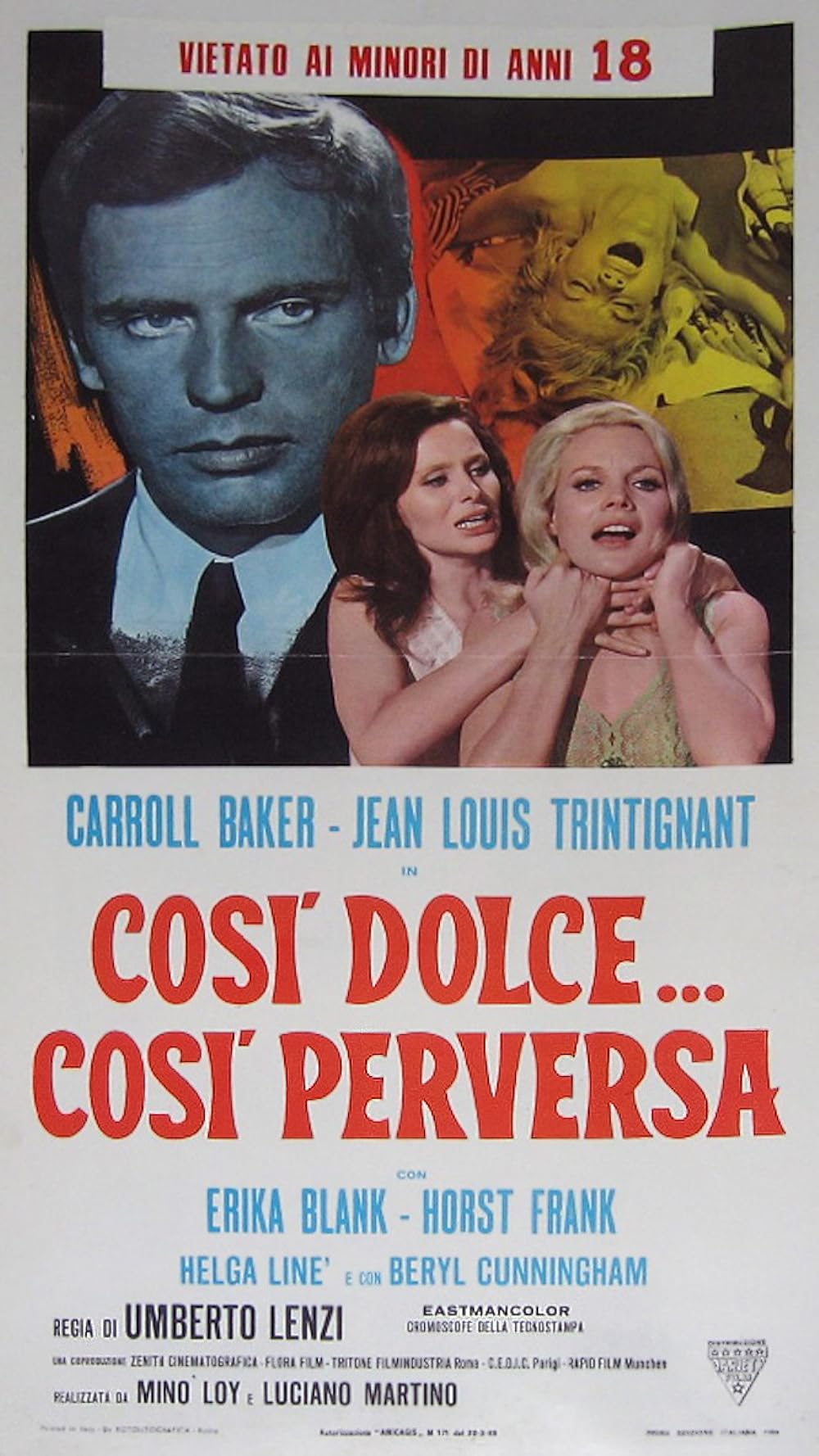
Umberto Lenzi directing a script written by Ernesto Gastaldi? Yes please! I should point out right away that this project finds neither at the top of their game (although the level of their game that they are at is still a very satisfactory level of their game for them to be at).

Jean Reynaud (not Jean Renault off Twin Peaks, although Michael Parks did work with Lenzi later on) is the most French of Frenchmen: brooding, pouty, speaks English weeth an assent, and loves a bit of philandering. He justifies this latter quality-slash-failing to one of his conquests by explaining that he's been married for three whole years, so naturally it's perfectly understandable that he openly covets everything with a vagina which passes within a hundred feet of him. Anyway, Nicole, an American woman, moves into the apartment above the one he shares with his poor wife, and she (Nicole) seems to be stuck in an abusive relationship with a very German man called Klaus. Jean falls in love with Nicole (veeeeery quickly) and she reveals that her appearance in his life wasn't as serendipitous as it initially appears, as Klaus has been paid to murder him and she's the bait. Who has paid for Jean's murder (I'll give you one guess)? Why does Nicole tell Jean this? And why doesn't Jean do anything to prevent Klaus from killing him?

Yes, that's right - Klaus does indeed follow through and kill Jean. Except, wait - why is Jean leaving threatening notes for his wife, despite being dead? It's not like he's still alive or anything, right? I mean, sure, the actual murder happens off-screen (/out of sight of everyone but Klaus) and Jean's body was too badly burned to be properly identified (a staged motor car death - possibly the defining trope of Lenzi's early gialli), but he's still dead, right?

This is basically the central mystery of the film: is Jean really dead? As such, it essentially takes what would become a standard surprise twist and places it front and centre. As such, there's no room for a last minute left-field 'despite what you'd assumed he's actually still alive' revelation, as we've spent the whole time since Jean's 'murder' inhabiting that left field, combing the soil for clues. And so, even though this film was made in 1969, before the giallo really took hold, already we have an example of the filone deconstructing the mechanics of a soon-to-be common plot twist (and playing with twists to the twist).

It's probably the giallo which is most indebted to Les Diaboliques - an influence which screenwriter Ernesto Gastaldi has readily admitted. Jean isn't as overtly mean as Michel in the Clouzot film, but he is a complete pussy hound, so you can understand why his wife Danielle is a bit fed up. An early scene in which the aforementioned couple drive around Paris discussing marital ennui is very on-the-nose, dispensing with thoughts of subtlety or subtext in favour of having the characters lay bare the failings of their marriage over the course of a two minute chat. Though Jean's subsequent behaviour - he drops Danielle at a shop and sits outside in the car to wait for her to return, only to catch a glimpse of Nicole and immediately drive off without a second thought for his wife - does probably the previous dialogue exchange redundant, as it conveys the same info as succinctly as the conversation had.

The film largely takes place in Paris, as noted, but does, of course, include a retreat to the coast for a romantic sojourn. It has to be sad that location doesn't quite play as important a role as it does in other Lenzi films - they may have only had a couple of days in Paris to shoot exteriors, but whatever the reason, the sense of place gradually fades away over the course of the film. One could say that this mirrors Danielle's failing and fading sense of self, and her increasing feeling of detachment, but that would be bullshit.

The film doesn't actually contain a ton of plot or incident, but it nonetheless flew by for me. Context is always important when viewing a film - one's mood, the circumstances in which the film is screened etc can hugely affect one's perception of the product - but I really was amazed at how quickly it whizzed by, which is a pretty big indicator that I was hugely enjoying it (also I know for a fact that I was enjoying it, which is a bigger indicator). The script/plot is a tad lightweight, but at the same time you get the feeling that the film is aware of this. At least, based on what Lenzi's said in interviews, he was aware that the script was a tad lightweight, and so he tried to make up for it in other ways. There's nudity (Beryl Cunningham doing her exotic nude dance thing), and there's wacky dialogue ("The atmosphere here is more libertine every day. I hope you don’t find that very awkward." "Well, it’s rather surprising."). 

There's Horst Frank skulking around being threatening (and you'd really have to ask how these giallo characters were so efficient at spying in the pre-smartphone era - they always manage to be in the right place at the right time without having been informed as to where that place or time was). There's a great Riz Ortolani score (and a not-so-great theme tune). There's Jean-Louis Trintignant, one of the coolest actors of all time, flirting with the concept of 'acting' versus 'non-acting', and just about getting away with it cos he's so goddamned cool.

There's a kissing scene which lasts nearly a minute and which involves a classic old-school movie kiss - no Frenching (ironically) to be seen, just two people being still-as-statues with their lips locked (to be fair, JLT's detached style wouldn't really suit a vigorous tonguing). There's Carroll Baker, less put-upon that putting-upon for a change and revelling in it. There's Erika Blanc, still popping out her baps at the drop of a hat. There's the crazily-contrived scene where a woman manages to describe the ferociously blond Horst Frank without once using the word 'blond', thus making him sound like JLT, with neither Danielle nor Nicole, who are ostensibly questioning the woman to try and ascertain whether Klaus or Jean is renting a room in a hotel, bothering to broach the hair colour topic. There's some 'groovy' dancing, as was contractually obligated in 60s gialli. And there's a damn enjoyable film, which represents no-one involved's best work but which goes down even easier than a philandering Frenchman.
0 Comments

The Bird with the Crystal Plumage (1970)

2/8/2023

0 Comments

 
Picture
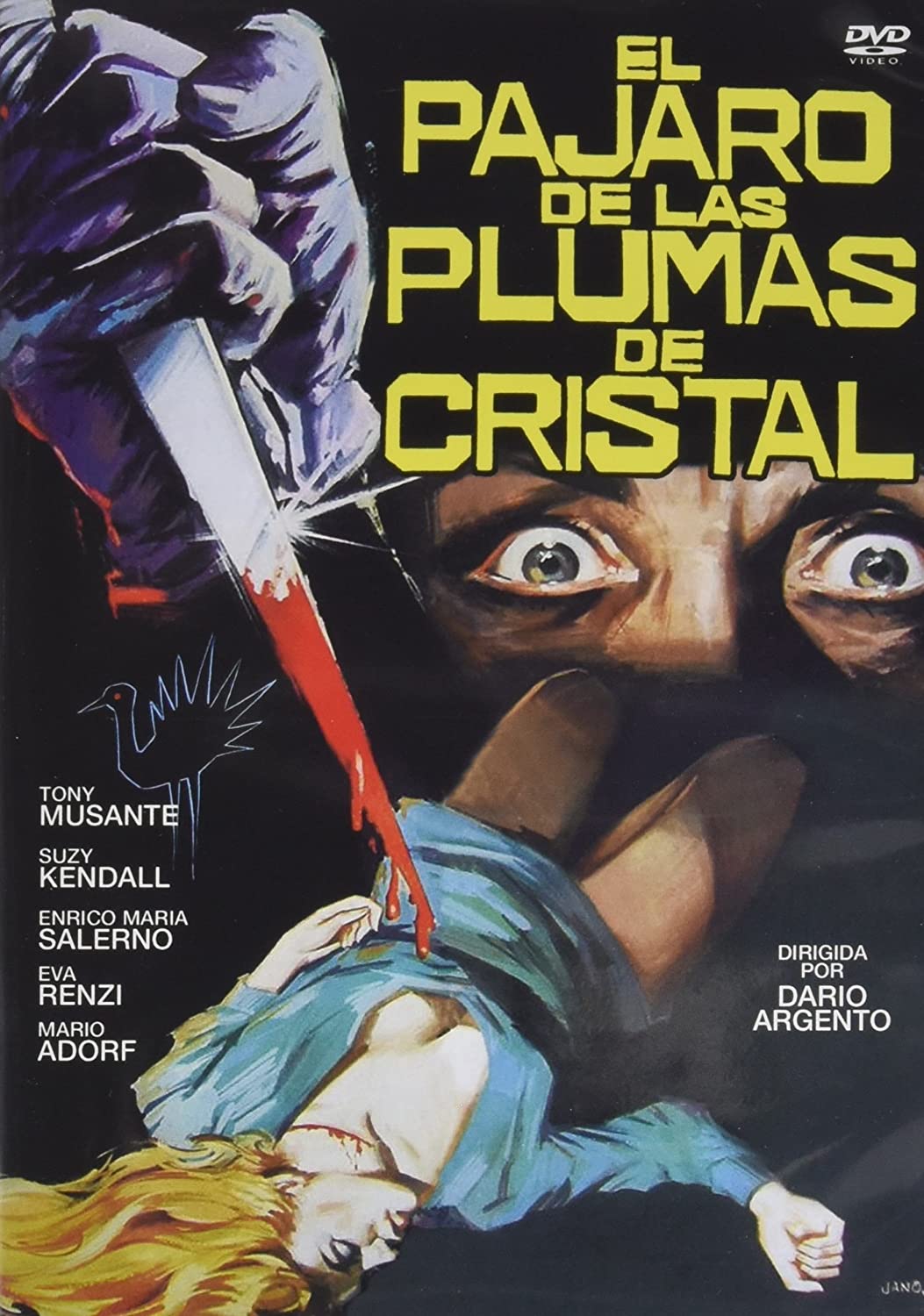
If Mario Bava was the grandfather of the giallo - which I'm not sure anyone has actually said before, but shush - then Dario Argento is its father. Not because he was Mario's son (he wasn't), but because he made this film, and several films like it, which had a profound effect on the direction taken by the filone thereafter.

Sam Dalmas - you all know this already, surely - is a penniless American writer trapped in Rome. His friend Carlo gets him a job writing a booklet about birds, the proceeds from which will be enough to cover his, and his gf's, air fare home. On his way back to his apartment with his paycheck he witnesses an attempted murder in an art gallery, and the police force him to stay in the country as a semi-suspect. Sam begins his own investigation to try and clear his name, and discovers that the scenes he witnessed may be connected with a serial killer targeting young women across Rome. After surviving a couple of assassination attempts, the second of which affords him a clear look at his attacker's face, the police mystifyingly decide that he can leave after all. However,  he's in too deep to give up now, pursuing his investigation to track the origins of a mysterious painting which the killer may have purchased. Ultimately, though, his investigations contribute nothing towards the cracking of the case - it's Carlo who saves the day, thanks to his ornothology prowess. But there's still time for one final, deadly twist...

Argento + Storaro + Morricone = good. This isn't a perfect film, by any means, but there's just something so pleasing about it. Argento would scale greater heights, but this is undeniably his most influential work, as it refocused the filone into the proto-slasher form which dominated the early 1970s, AKA the glory years. Previously there was the odd Bava-esque black gloved killer, but the most influential giallo film previously was The Sweet Body of Deborah (taking its own cue from Les Diaboliques), and gialli tended to be about rich people tricking each other for inheritances. Now, suddenly, the gloves were off (and then put right back on again), as Freudian psychology took hold, and deranged killers, haunted by past events, began to stalk the screen.

I've touched elsewhere on potential generational reasons for this shift (viz. younger directors being willing to address the stain on the national psyche that was WW2), but it's probably fair to say that Argento's bombastic personality and style suited a more graphic, outré style of film more than a twisty-turny rich-people-play-tricks-on-each-other-in-a-villa style of plot. His films take place in the city, where his characters can simultaneously be surrounded by others yet, paradoxically, also alone, so very alone, when the time comes. (Something he took to extremes in Tenebrae, which [he claimed] was set in a future in which the world has been significantly  depopulated. )

The film is an unofficial adaptation of The Screaming Mimi by Frederic Brown, from which it takes the conceit of previously-repressed trauma  inspiring a series of murders. The look of the murderer is pretty much full-on B&BL Bava, while the comedy is full-on Ed Wood. OK, that's a cheap shot at both Argento and Wood, but the comedy isn't great, and there's quite a lot of it here, but it's something that Argento clearly enjoyed as he returned again and again to drink at the same unfunny well. The patented Argento mad science gets an early look in, with a scientist, who works in a laboratory which resembles a laundrette, using a computer to deduce that the killer's description (40, 6ft, slender, dark brown hair and 75kg) matches 150,000 current Rome residents. While this can't have been anything but a wild estimate which could have been performed by the human brain, he goes on to say that "most" of these matches are in jail... Eh?!

There's a heavy police procedural influence, although the fuzz prove to be pretty useless - Sam's stuttering investigation (lil' jokey reference there to the stool pigeon guy) is based on uncovering some info about what happened to the first victim before she was murdered, info that the fuzz surely would've discovered themselves. Then again, maybe they did follow the same line of enquiry as Sam and ultimately abandoned it, as, although it proved useful in explaining the killer's motive/root trauma, it didn't really open up any opportunity to nab them. You'd have to question what the two men on duty outside Sam's apartment are at though, allowing him to bugger off to visit Mario Adorf in a loft, and then allowing the killer to pop upstairs  to try and kill Suzy Kendall. And the decision of Inspector Morosini to finally allow Sam to leave the country after he's been attacked by Reggie Nalder is literally insane, given the presumption at that point would have to have to be that Nalder's the killer, with Sam the only person who could positively ID him.*

That chase is an interesting one, scored as it is by discordant Morricone noises. It's probably more stylish than tense, with the direction never quite building suspense, largely due to an absence of medium shots - everything is either tight or extremely wide, so there's no real internal rhythm generated. The arty quick shots are almost Tinto Brass-like, although the casting of Nalder does go a long way to adding a sense of menace to proceedings. Saying that, Nalder folds like a limp vest when Sam runs to appeal to some Bigger Boys for help (Bigger Boys who show absolutely no interest whatsoever in what he says), and the chase dynamic switches on a dime, with Sam now pursuing the armed assassin. Eh (again)?!

Further Bava influence can be seen in the prominent role played by phone calls in proceedings - the Telephone segment of Black Sabbath was one of the earliest gialli, but it hadn't as yet proven especially influential in the filone. But this film, as stated, excelled in the influence stakes - just look at how many gialli which followed in its wake referenced animals in the titles, not least Argento's two immediate follow-ups. This film isn't perfect, and in another universe where it didn't (eventually) become a big commercial success it might be dismissed as just another decent Italian thriller. But in this universe, it's a behemoth. The moment when the camera pulls back from Sam standing isolated in front of some steps and pans across the city, slowly picking out an apartment window hundreds of metres from him, then suddenly cuts to a close up of a pair of black leather gloves is truly the moment the giallo arrived.

Viva Argento!

*He also doesn't have a good memory, if his "Have we met before?" exchange with Suzy Kendall is anything to go by. Although, intriguingly, this doesn't come back, and is left hanging, just another moment designed to unsettle the viewer, to throw them off the scent by overburdening them with smells (ie chucking a load of red herrings into the mix, in case that wasn't clear). It's an approach Lucio Fulci used to the nth degree in House by the Cemetery, a film which  sets itself up as a giallo only for the killer to turn out to be a Zombie living in a cellar (!), and which contains a near-identical exchange to the one detailed above.
0 Comments

Orgasmo (1969)

12/7/2023

8 Comments

 
Picture
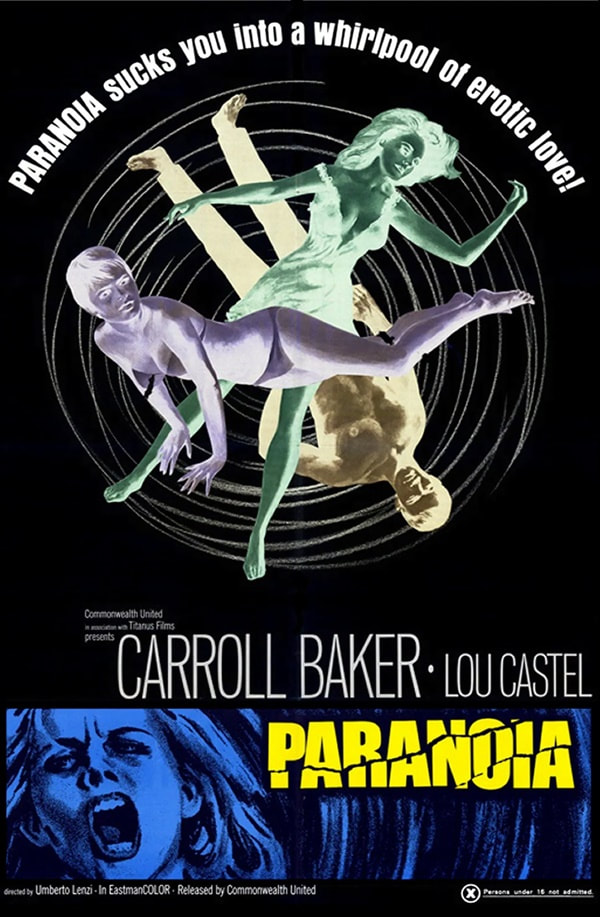
This is Umberto Lenzi's first giallo, and it very much set the template for his next few efforts, until the Argento-isation of the filone led to his producing more bodycount-type films (although he did essentially remake this, as Oasis of Fear, in 1971). And yes, this film was marketed as Paranoia for a while, and he made another film called Paranoia, yada yada etc.

Recently-widowed Kathryn West, who seems to be a celebrity although we're never told why (possibly just because she's a wealthy heiress) arrives in Italy to recuperate in one of her husband's properties. Her attorney/lawyer, Brian, is helping with the sale of her newfound assets as well as dealing with her husband's gobby sisters, who want to get their hands on as much of the financial pie as possible. He's also nursing a bit of a grá, as we say in Ireland, for Kathryn, apparently seeing no conflict of interest or impropriety in seeking to marry her. However, she has only eyes for Peter, a young ragamuffin whose car allegedly broke down outside her villa one day. He comes to stay with her, then his sister comes to stay with them both, then it turns out that she's not really his sister and they're shagging, then they get Kathryn hooked on pills and booze and then they convince Kathryn to sack the nosey housekeeper and essentially imprison her in her own home. Then some more stuff happens!

Writing it out there, it's surprising that one of the things I wrote while watching the film was that the second half drags somewhat, as it has "nowhere to go." It does have somewhere to go - that long list of what happens once Peter turns on Kathryn basically takes up the third quarter of the film, but I suppose this is one of those situations where the success of this film (and its progenitor The Sweet Body of Deborah) led to so many facsimiles being made that familiarity breeds... certainly not contempt, but possibly a sense of inevitability, where it's clear in what direction things are moving, but they just take that bit longer to get there. Which isn't to say that this is a boring film - it's actually a terrifically-made, fun flick - but its impact and effectiveness has been dulled because its impact and effectiveness back in the late 60s led to so many similar films being produced. 

The template was certainly set here for the Lenzi-Baker collabs: big houses in bright sunshine, young cads, cheesy nightclub dancing, speeding (too speeding*) cars, rack focuses to drinks glasses are all present and correct. Carroll Baker is typically great here-she wasn't afraid to own up to being somewhat further down the path of life than her co-stars; indeed, that's something of a theme here. The young, dashing ('dashing'-more on that anon) Peter and Eva offer a chance to engage with the 1960s youth culture by opening a door which seems to have been long-since closed for Kathryn-judging by the ages of her aunts-in-law her husband may have lived through the 1860s. Her uncertain attempts to get to grips with the free and easy lifestyle of the kids allows them to get their metaphorical claws into her, to hook her on pills and to systematically isolate her from everyone and everything she knows.

But she already seemed quite isolated - there's no evidence of her having had any real friends. Indeed Brian, her aged attorney, seems to be the closest thing she has on this front, and he's not all that close. The scene in which she admonishes Peter and Eva by telling them that they're too young to realise that they should hate themselves contains more raw human truth than a dozen other gialli combined. In common with most films made by middle-aged Italian genre directors, you get the sense that the freewheeling drug-taking ways of the youth are viewed with suspicion, if not downright hostility. Here, though, there's not a blanket dismissal of the evils of drugs, rather an admission that they are ultimately only an attempt to paper over the ever-widening cracks of the soul. And when the soul is corrupt, as pretty much every soul is in a Lenzi giallo, then the drugs ain't gonna change that.

(It's worth pointing out that while Baker's character does engage with youth culture with initial abandon, and is clearly sexually liberated etc, she does laugh off being called a 'slut' or 'whore' with disconcerting ease. This possibly reflected male attitudes of the times - we'll give you more freedom etc but don't forget that ultimately we're better than you - or it may just be another case of the middle-aged Italian flex.)

Now on to the youths. Colette Descombes is certainly a fascinating presence, sexy and vampish, but her 'brother' is another kettle of fish. Lou Castel is no-one's idea of an adonis, which makes the opening act of the film creak at times - are we really to believe that Kathryn is infatuated by Peter to that extent? You could make the argument that she lives in a closed-off world, but still - he just isn't charming or handsome enough for the scenes to ring true. He's much better when called on to turn into a weaselly manipulator though, tackling the part with a relish that would probably have been beyond a more relaxed, suave Hilton or Sorel-type of actor.

And speaking of closed-off worlds, it's worth considering the form of house arrest to which Kathryn is subjected by Peter and Eva. Sure, they're regularly drugging her, but she does have moments (long moments) of lucidity. And she's not all that trapped given a) she has a working phone for most of the time she's under house arrest, b) she still has a loyal servant living on the property, which c) is not by any stretch of imagination a high security prison. 

This isn't the first time where logic falls somewhat short (on which note she herself falls twice, each time horrendously unconvincingly); an early scene has her apparently imagining a home invader, being calmed by her housekeeper Terry, and ends with her seeing a man walking across the garden beneath her window. There, then is the proof she needed - the guy has a club foot, and is walking at a very leisurely pace, yet she doesn't summon Terry to prove that she wasn't imagining things. With that level of naiveté/gormlessness, it's easy to see why she was such easy prey for those devious kids!

In an interview accompanying the Severin Blu ray of the film Lenzi belies his advanced age to dextrously pat himself on the back for the ingenuity of the film's twist ending, one which "no-one" could have guessed. Well, to return to my notes, Umberto: "End twist predictable." And it is - though, again, at the time it'd likely have gone down a storm (even if in the interview he's talking about how it bamboozled the audience at a retrospective screening in Venice), but because we now know that this is a Lenzi giallo, we know there's going to be a late twist (or two), and the main twist here can pretty much only be one thing, an attendant difficulty when you populate your films with so few characters. Also, the 'subtle clue' which is shown in flashback did stand out a mile to me at the time (again, it wouldn't necessarily be noticed by everyone, and it is executed without undue attention being focused on it, but anyone who's aware that they're watching a mystery film should pick up on it). That said, even if you know what's coming, you should still have a hell of a time with this film, which, even if it's not the best of Lenzi's gialli, will still give the discerning giallo fan 90-odd minutes of orgiastic pleasure.

IF YOU... have manipulated yourself into inheriting a fortune through murder and blackmail, don't openly celebrate outside the executor's office!

*“Drinking on an empty stomach really impairs my driving skills” - a very sharp observation there from Eva.
8 Comments

Welcome to Spring Break (1989)

19/6/2023

0 Comments

 
Picture
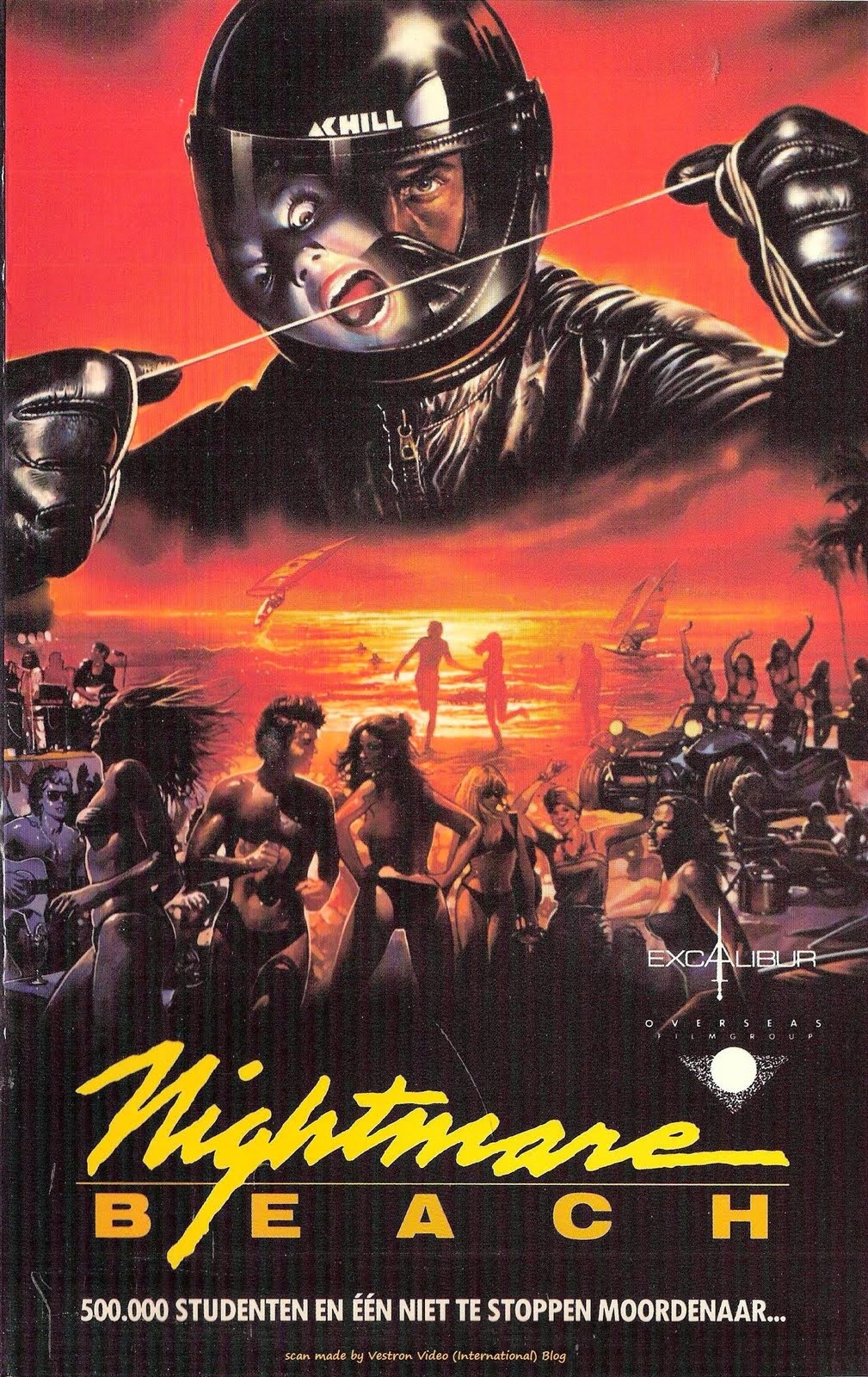
"Welcome to Spring Break... The annual migration of the idiot," as Michael Parks succinctly puts it. And if there's a better showcase for this than the 2020 spring break, which involved a lot of blithely ignoring the encroaching Covid-19 pandemic, then I haven't yet seen it. But I have seen this giallo/slasher. Three times, in fact!*

The middle-aged leader of the youth motorcycle gang The Demons is sent to the electric chair for a crime he claims not to have committed. The execution was executed in a quaint seaside resort which hosts the annual uniquely American shenanigan-fest known as spring break. At least, somewhere adjacent to the main filming location hosts it, so the producers were able to nip over there to film some stock footage to blend into the final film. Anyway, when the next spring break rolls around the usual array of airheaded teens and twenty-somethings roll up to get wasted and roll in the hay. But not everyone's happy to host the libidinous layabouts - the local police chief (John Saxon playing the standard hardassed John Saxon cop, with a sprinkle of sexual perversion on top) and local priest disapprove of anything approaching fun. As does a mysterious leather-clad biker who shows up and starts electrocuting revellers with his specially modified motorbike. Is it Diablo, the dead gang leader? Course it's not-if you know anything about gialli you already know who it is!

This film is possibly directed by Umberto Lenzi, and possibly not directed by him - for years it was believed that he made it using the pseudonym Harry Kirkpatrick, until an interview in which he attributes direction to the film's screenwriter James Justice (who wrote the script under the Kirkpatrick alias). Roberto Curti, who's far more knowledgeable about these things than me, says that Lenzi made it, and my opinion is that he's probably right. It's a long, long way from Lenzi's earlier gialli and poliziotteschi, but so was all of his work from this era - Hitcher in the Dark and Black Demons (especially the latter) are textbook examples of the kind of low rent Filmirage-esque production (HitD actually was produced by that company) which proliferated in the late 80s; specifically, Italian films shot in America which captured enough local flavour to be sorta-convincing as American productions. The drawback of this shift in setting was that the films lost some of their uniquely Italianate edge - those wacky quirks which marked their fare apart from, and more enjoyable than, standard US exploitation films. The Filmirage-type productions actively tried to pass for lower tier American product, which probably helped international sales, but cost the films something of their souls. (I should say now that I actually like a lot of Filmirage films, several of which did retain just enough of their Italian qualities to stand out - I merely refer to them here as a yardstick because they proliferated to such a degree). But, to bring my ramblings back around to this film, even though we're a long way from Seven Blood-Stained Orchids here, I do think the same man's hand (directing hand) is responsible for both.
 
The film probably wouldn't be considered a giallo without the Italian involvement (although the identity of the killer - which I won't be getting into here because it had very much Been Done by this point, and I have written about the trope before - does provide another link), and it's pretty much an attempt to capitalise on the fag end of the slasher trend; gialli not being exactly hot box office fare in the late 80s. Killing young people through electricity isn't very gialloey either (although Wes Craven may have liked the idea, as Shocker, made the following year, isn't dissimilar to this film in its set-up). 

The cast are largely young and expendable, and there's no attempt at any real investigation into the killer's identity. This is somewhat of a surprise, given the prevalence of the police in the film, as well as the manner in which de facto leading man Skip is run out of town by John Saxon, with a threat that he'll be framed for the murders if he returns ringing in his ears. He does return, but rather than conduct anything approaching a logical investigation, he merely sends his new girlfriend out on her tiny moped, hoping to lure the killer into attacking her (he's not following at a discreet distance ready to intervene or anything, that would be too intelligent an idea for a spring breaker).

Skip is probably the least annoying of the young male cast, and it says a lot when you're saying that about a character with whom we're meant to sympathise just because he threw an interception in the Rose Bowl. This is classic Italians-in-America filmmaking: throw in some classic American references to uniquely yankly products like the Rose Bowl, and no-one could possibly question the provenance of the film. And if the shoehorned-in reference tugs on the audience's heartstrings, so much the better. Skip mopes into town and quickly catches the eye of local barmaid Gail, who mopes to and from work at walking pace on her little motorbike. She's also the sister of the girl who Diablo murdered (allegedly), which is pretty useful for narrative purposes. Gail and Skip bond as they investigate the disappearance of his homosexual friend, Ronny, who's also, bafflingly, the self-appointed leader of a 'beaver scouting patrol', bless him. He's fallen afoul of the Demons, now led by Diablo's homosexual brother, who strangely has a different ethnicity and accent. His accent (stilted and Hispanic) is actually almost the exact same as his new lady's, and she is literally the exact same as his brother's old lady.

As already stated, Skip and Gail don't really drive the narrative at all (if they do, it's at walking pace), and the film just bounces along from set piece to set piece, including some footage shot at a Playboy wet t-shirt competition. There are fairly chunky and clunky comedic elements, with the Porkies-style films obviously being another influence. And speaking of films being influences, who could forget Jaws, which lends a mayor-trying-to-keep-a-lid-on-an-escalating-crisis subplot (Mayor Loomis in this case, in another horror film reference), as well as the scene in which an utterly hilarious banterhound pretends to be a shark (check out the police dude's reaction - shoot now, deal with animal rights activists later). 

The chasm between the acting ability of the young and old(er) players is so great as to be almost confusing; one feels that Michael Parks's perma-grimace is an unvarnished reaction to the efforts of his co-stars. The murder scenes are OK, and feature some decent burn make-up and some less successful shots of mannequins' heads on fire. The killer's appearances (as well as those of a mute weirdo cop) are accompanied by a heavy metal-lite track, showing Umberto had been paying attention to the 80s sonic swerve taken by his old pal Dario Argento (or else James Justice had been paying attention, which is actually probably as likely). The up-tempo riff-monstering can only do so much to make things exciting, though, especially in any scene involving Gail's moped. 

I suppose I'll briefly touch on the motivation offered up by the killer - the usual 'I'm eliminating sin by sinning' nonsense. The killer is affronted by the raw sexuality and carnality of spring break (but, obviously, simultaneously obsessed with it). In much the same way, this film made by a group of middle-aged Italians doesn't know quite what to make of its young subjects - it's willing to depict them having fun, often with their baps out, but you get the feeling that there's a school of thought that they may be having just a leetle too much fun on occasion. That particular school is out for Easter, though, so the filmmakers do bravely depict plenty of immorality.

*Take a wild guess when the third time, after which this review was written, was...
0 Comments
<<Previous
Forward>>

    Author

    Dáire McNab

    Archives

    June 2025
    February 2025
    August 2024
    July 2024
    June 2024
    May 2024
    April 2024
    March 2024
    February 2024
    January 2024
    December 2023
    November 2023
    October 2023
    September 2023
    August 2023
    July 2023
    June 2023
    May 2023
    April 2023
    March 2023
    February 2023
    January 2023
    November 2022
    October 2022
    July 2022
    June 2022
    October 2019
    July 2019
    May 2019
    April 2019
    March 2019
    December 2018
    November 2018
    October 2018
    September 2018
    August 2018
    July 2018
    June 2018
    May 2018
    April 2018
    March 2018
    February 2018
    January 2018
    December 2017
    November 2017
    October 2017
    August 2017
    July 2017
    June 2017
    May 2017
    April 2017
    March 2017
    February 2017
    January 2015
    December 2014
    November 2014
    October 2014
    September 2014
    October 2013
    September 2013

    Categories

    All

    RSS Feed

Powered by Create your own unique website with customizable templates.